
In this blog, I share a practice that I have started recently which is having a positive impact on my life. I also write about my recent experience with depression with the hope that, by sharing what has helped me, this may help others who are struggling or just want to level up their life.
TLDR*
I’ve started a mindfulness practice where I track and log ONLY my positive emotions and what I was doing when I felt them every day using the app How We Feel. The impact has been increased self-knowledge and confidence, more gratitude for life and much joy.
Background
At present, I feel filled with gratitude and love for life, but the last few years have been turbulent times for me and as recently as January I was feeling depressed and was also suffering from some challenging physical symptoms like brain fog. The problem is, when I am feeling depressed my blinkers come on and I can become very narrowly focused – something that others with a history of depression will probably relate to. I fall into “all-or-nothing thinking” and believe that negative emotions consume my life, that I don’t have access to happiness and will never experience it again. Even if I tell myself that it’s not so, I find it hard to believe because I feel it so strongly.
Mindfulness practice
Mindfulness has been instrumental in bringing a greater sense of connection into my life in recent years and it has also helped me to develop a growth mindset. A mindfulness teacher once told me, “Mindfulness is sometimes described as kind awareness – and if you can’t be both kind and aware, choose to be kind”. On my journey, I have committed to bringing a kind awareness to all aspects of my life and it has brought a huge amount of learning and personal growth so far. In a retreat that I attended last year, one of the facilitators said, “I treat my life like a scientist treats experiments in a laboratory, and I expect occasional explosions!” Since one of my core values is “continuous improvement”, I love the practice of mindful self-reflection, because it enables me to treat all of life as a practice ground for trying new things: celebrating successes and extending compassion towards myself in the face of failure.
Tracking emotions
I’ve mentioned in previous posts that I do regular check-ins where I stop and take note of my emotions and needs. Last year I started experimenting with an app called How We Feel which is specifically designed to help quickly and easily log emotions on a phone or tablet, as an alternative to a more traditional journal entry.
Swipe to see a slideshow of the first few screens of How We Feel:
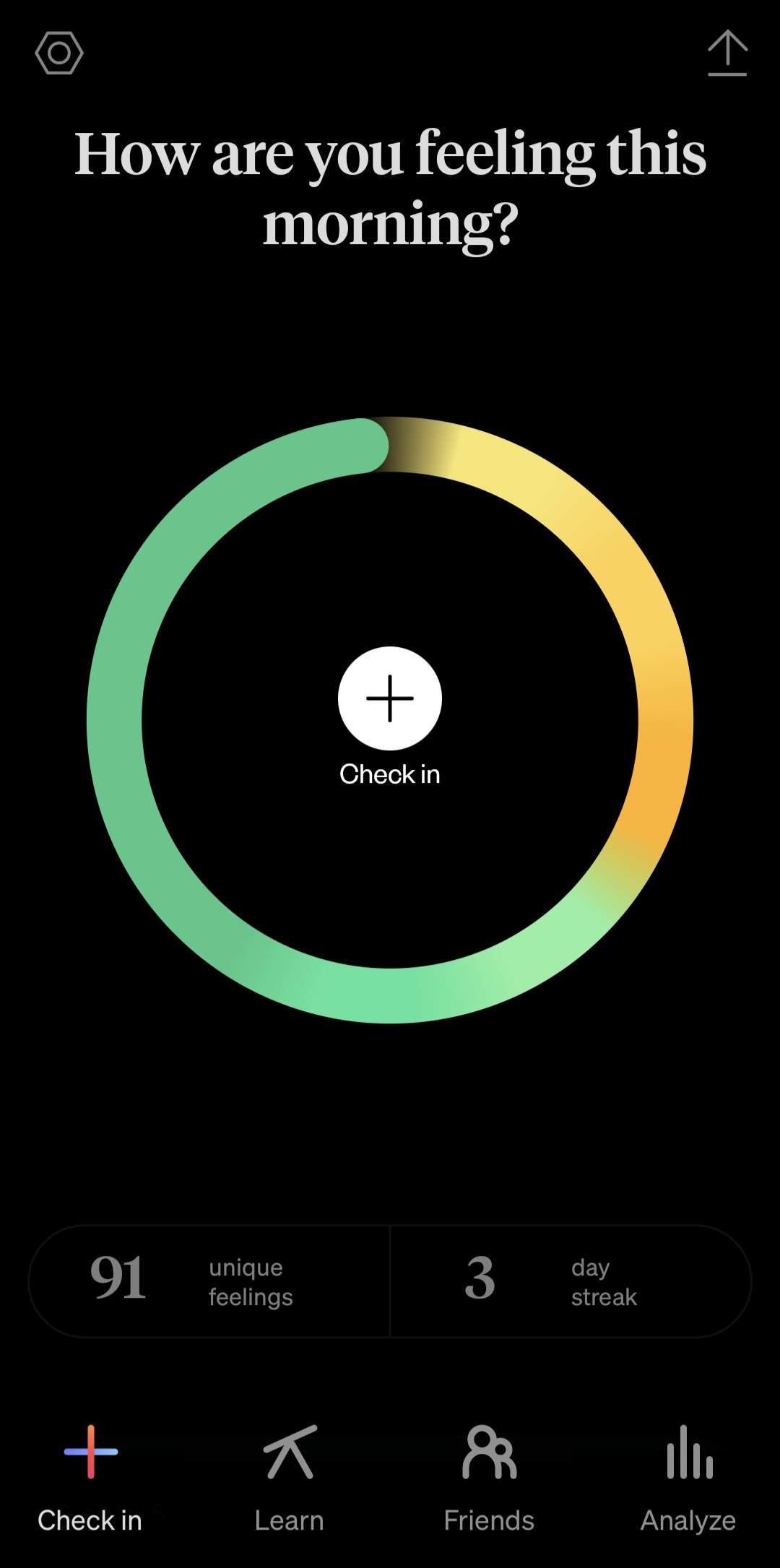
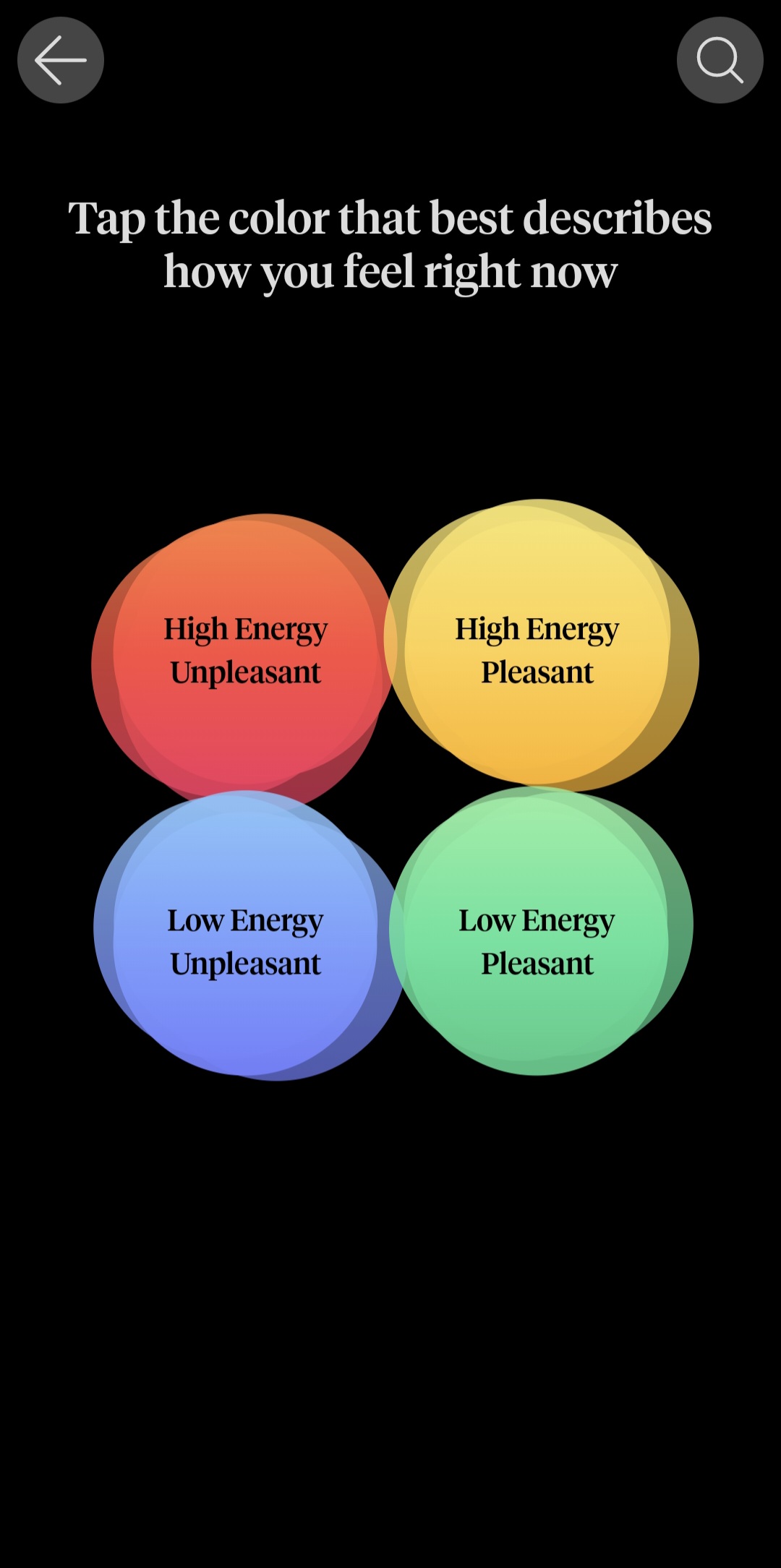
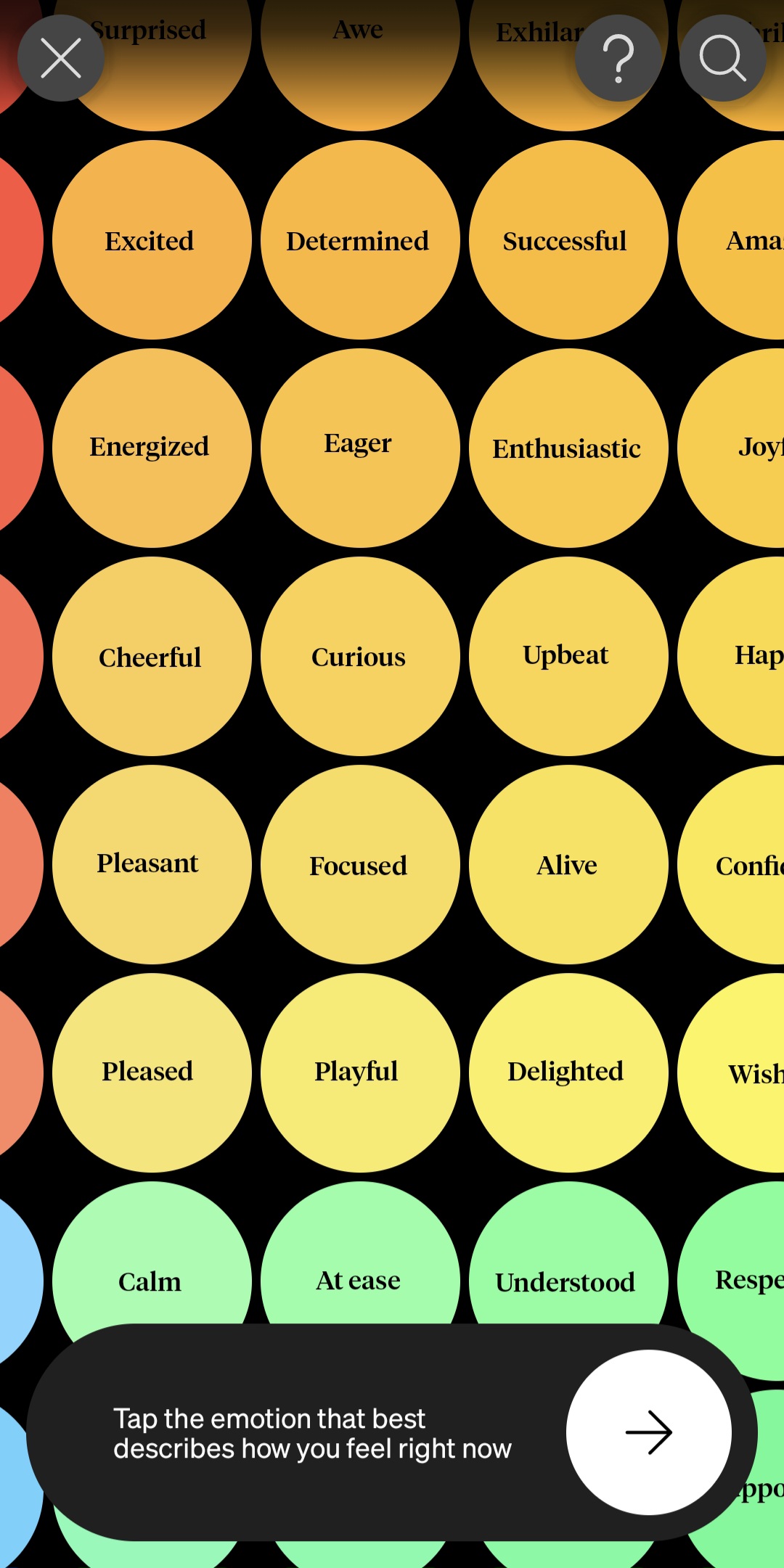
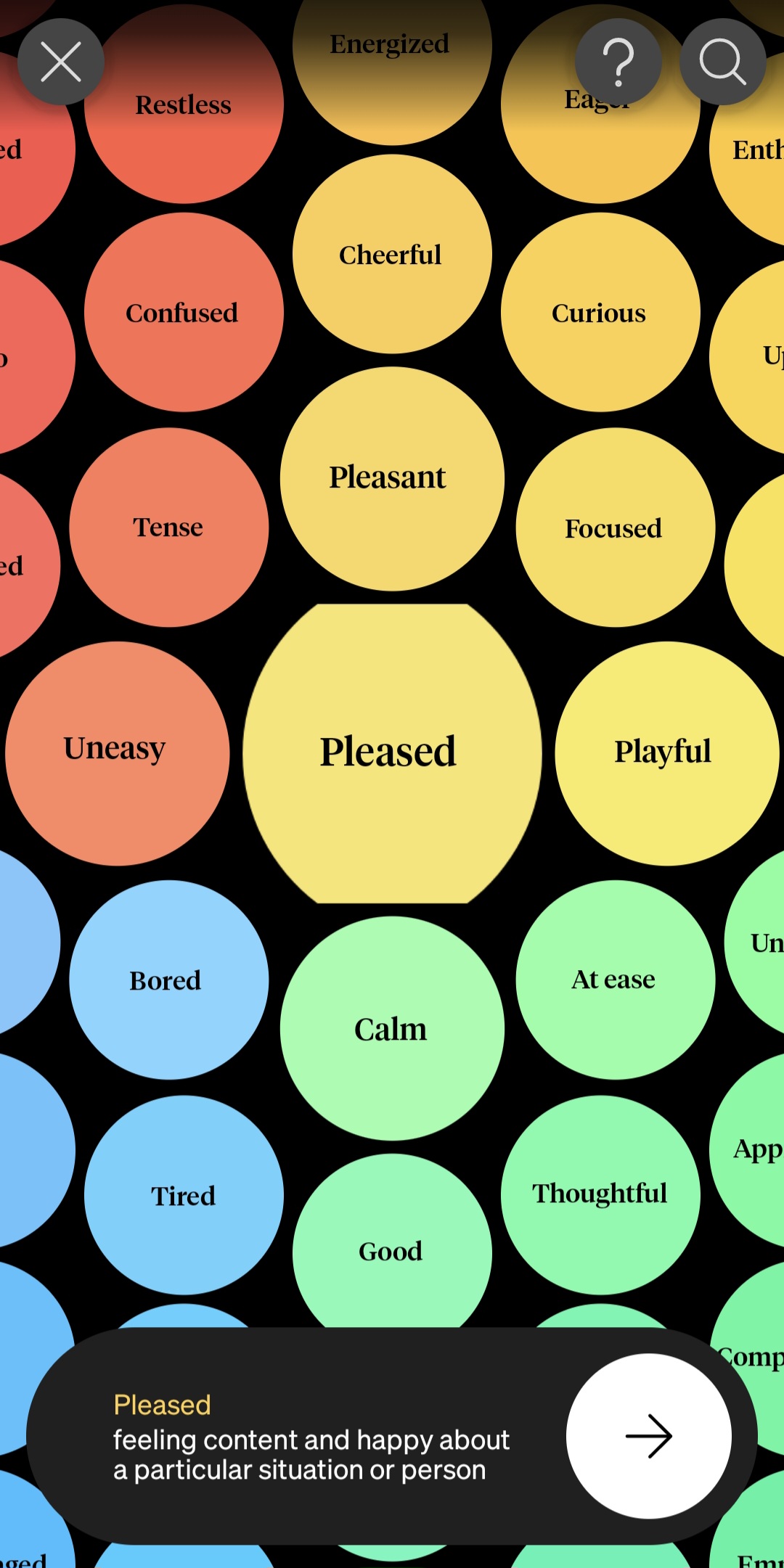
My process for logging an emotion on How We Feel is as follows:
- Select from 4 high-level categories: high-energy positive (yellow), low-energy positive (green), high-energy negative (red) and low-energy negative (blue).
- Within this category, select the specific emotion I’m feeling.
- Choose from a selection of options what kind of activity I was doing, who I was with and where I was when I felt the emotion.
- Enter a short free-text entry about what specifically prompted the emotion to give some additional context.
The app automatically tracks the time of day, day of the week and the weather, and additional metrics that can be logged include exercise and sleep. As a data lover, I appreciate that it provides an analysis of trends and some fancy charts, and you can choose to see a summary of different timeframes including “all of time”, monthly and weekly. It’s also possible to share all or part of the check-in with friends. The app enables the user to set daily reminders to check in, so I found it fairly easy to form a habit.
A change of approach
When going through a tough period last year I was regularly logging my emotions in How We Feel and, although I already knew I wasn’t happy, somehow seeing a list of blue (low-energy negative) emotions there on my screen reinforced this. In January I noted that I had entered “tired” 17 times and it was my most logged emotion. I had a breakthrough when I realised that I didn’t need any more increased awareness of my negative emotions. I knew that a negative emotion meant I had unmet psychological needs, but what I needed was to have a better awareness of when those needs were met, and how to meet them. From then onwards, I decided to start logging ONLY positive emotions.
So now, as I go about my day, I am much more consciously aware of my positive emotions, and I look forward to adding them to How We Feel. I particularly like updating the free-text field since this helps me to remember the exact context and get specific about what it was that led to a feeling of inner alignment. When I come to check-in, I often find myself gushing about lots of things that I feel gratitude for.
The benefits
This practice has had the following benefits:
- I’ve realised that I am not depressed all the time and that my emotions are like the weather, changing many times throughout the day.
- I have a body of very specific evidence, which I can refer to if needed, that reminds me that I feel positive emotions regularly – which is particularly helpful for countering the negative blinkers of depression.
- I have greater self-awareness, including what motivates me and gives me energy (including a sense of flow and vitality) and what I want more of in my life.
- I’ve been able to start using these learnings to implement positive changes, which has improved my social and professional life. Notably, I’ve received more positive feedback at work in the last few months than I received all last year.
- I feel more self-confident and have a renewed sense of gratitude, wonder and excitement for the possibilities ahead.
*TLDR = “Too long didn’t read”, which means “here’s what I’m trying to say summarised in a nutshell,” for those not in the know.
 Mindful Alice.